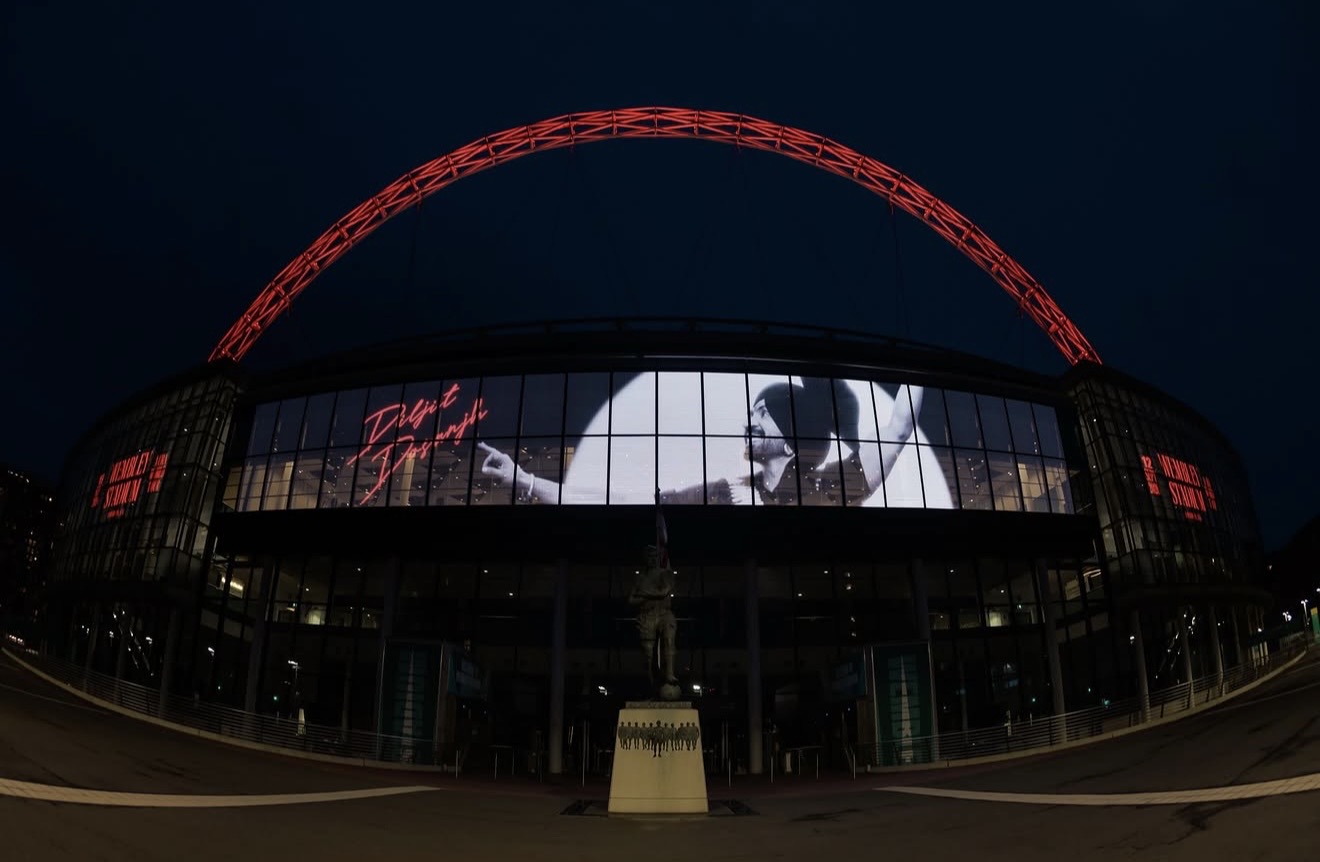
There are some nights in music that feel bigger than a concert, and 12 September 2026 was one of them for Punjabi music. Under the famous Wembley arch, Diljit Dosanjh became the first Punjabi artist to headline Wembley Stadium, bringing his AURA World Tour to the iconic 90,000-capacity London venue. Wembley had already officially recognised the historic nature of the booking before the show, but when the night finally arrived, the achievement became real in front of a packed stadium. This was Punjabi music occupying one of the most famous stages in the world, not as a guest appearance or a small part of somebody else’s show, but with Diljit as the headline attraction.
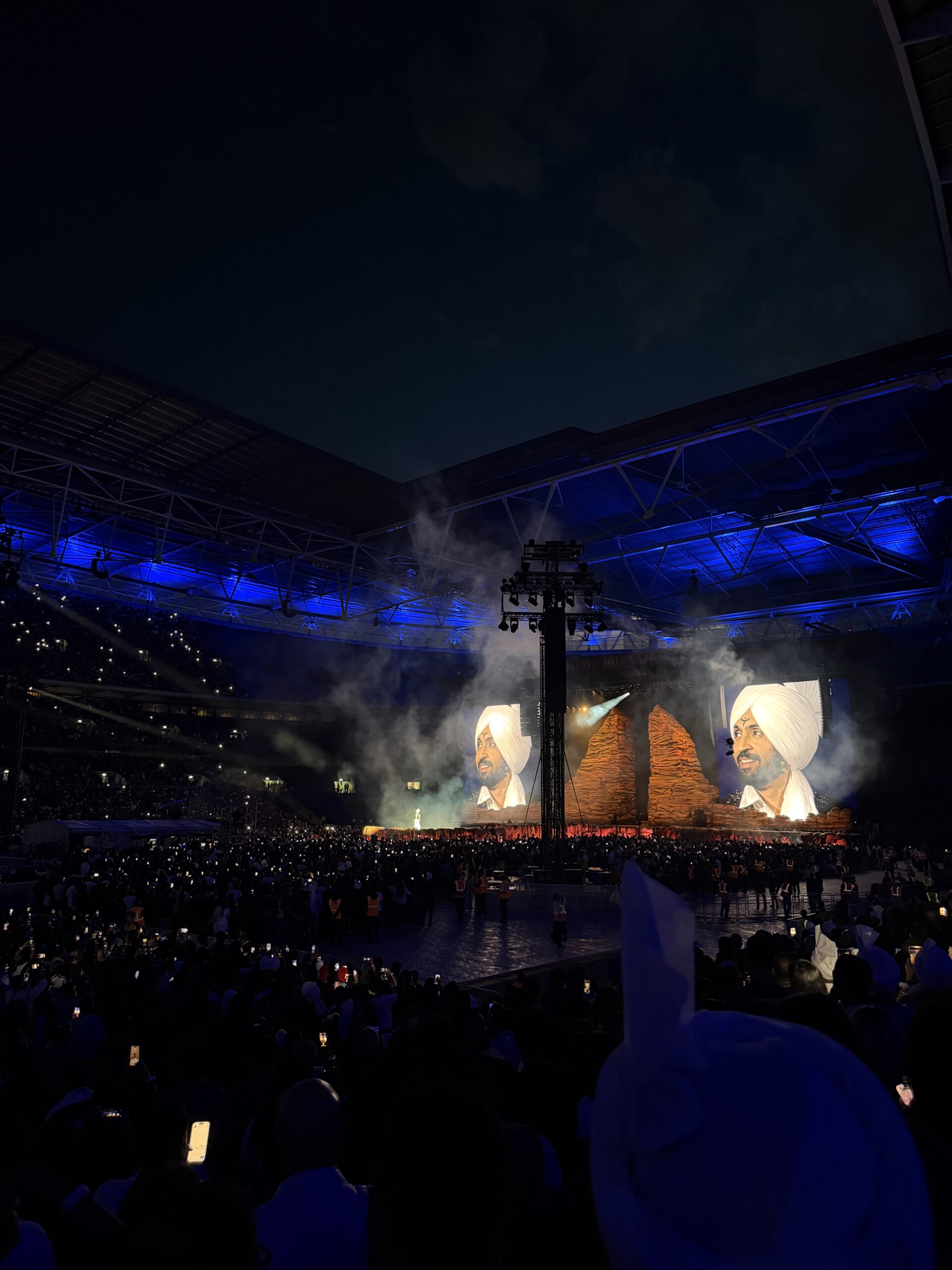
From the moment he appeared, Diljit made sure everyone understood exactly what the evening represented.
“Punjabi Aa Gaye Wembley Oye!”
rang around the stadium, a Wembley twist on the phrase that has become synonymous with his international journey. Bhangra beats followed as Diljit launched into a show spanning more than two decades of music, with tracks including G.O.A.T. and Lover among the songs sending the crowd into celebration. Thousands of phone lights illuminated the stands while fans danced along, turning Wembley into an enormous Punjabi party. But between the music and spectacle were moments where the scale of what Diljit had achieved seemed to sink in. As he addressed the audience, he declared:
“This moment will go down in the history books.”
And it wasn’t difficult to understand why he was proud. Throughout the evening, Diljit could be seen looking out across the vast stadium and taking in the crowd around him. We cannot know exactly what was going through his mind in those moments, but his words before the concert reveal just how much Wembley meant to him. Diljit described performing there as a “dream” and spoke about the extraordinary journey of coming “from a village to here.” He explained that when the team considered booking Wembley, people warned them to think again because of the sheer size of the stadium. Diljit’s response was about more than his own success: “I want our people to be happy and say, yes, we can do this too.” He also said he was happy for his people and for the next generation.
Another standout moment came when Diljit performed “Sanson Ki Mala Pe”, bringing a completely different atmosphere to the huge Wembley setting. The qawwali, famously associated with Nusrat Fateh Ali Khan, allowed the show to move away from its high-energy Bhangra and Punjabi anthems for a more soulful moment. Hearing Diljit’s voice carry the familiar words through Wembley added another South Asian dimension to an already historic evening, connecting the modern Punjabi superstar’s stadium show with a musical tradition loved across generations. Surrounded by thousands of fans beneath the Wembley arch, the performance showed that the night was not only about huge production and chart hits; there was space for emotion, heritage and the sounds that have shaped South Asian music long before Punjabi artists began filling stadiums of this size.
That makes those images of Diljit standing in the middle of Wembley even more powerful. This was an artist who once told his mother he was going somewhere big, even though, as he later recalled, she did not know what Wembley Stadium was. Months before the concert, Diljit had spoken about Wembley while remembering some of the legendary performers associated with the venue and sharing that personal story about his mother. On Saturday night, the thing he had spoken about became reality. From humble beginnings in Punjab to looking out at one of Britain’s biggest stadiums filled with people who had come for Punjabi music, it was a remarkable full-circle moment.
Wembley Becomes a Celebration of Punjabi Identity
What made the night particularly special was that Diljit did not reach Wembley by distancing himself from his identity. Punjabi remained at the centre of the show. His turban, traditional clothing, language and music were all visible on one of Britain’s biggest stages, while reports also noted that fans could access complimentary turban-tying at the venue. Diljit has followed that same approach throughout his global rise. In 2023, he became the first Punjabi-language singer to perform at Coachella, and his international profile has since continued to grow through huge tours, collaborations and appearances on some of entertainment’s biggest platforms. Wembley was another step forward, but the identity accompanying him onto the stage remained unmistakably Punjabi.
Diljit also made sure that the enormous size of Wembley did not remove the connection with his audience. During the show, he invited fans onto the stage, including children and an elderly woman, posed for selfies and handed out gifts. Even those sitting in the furthest reaches of the stadium were acknowledged. It gave the night a warmth that contrasted with the huge scale of the production: one of the world’s biggest Punjabi stars standing inside one of the world’s most recognisable stadiums, but still finding ways to speak directly to the people who had helped him reach it.
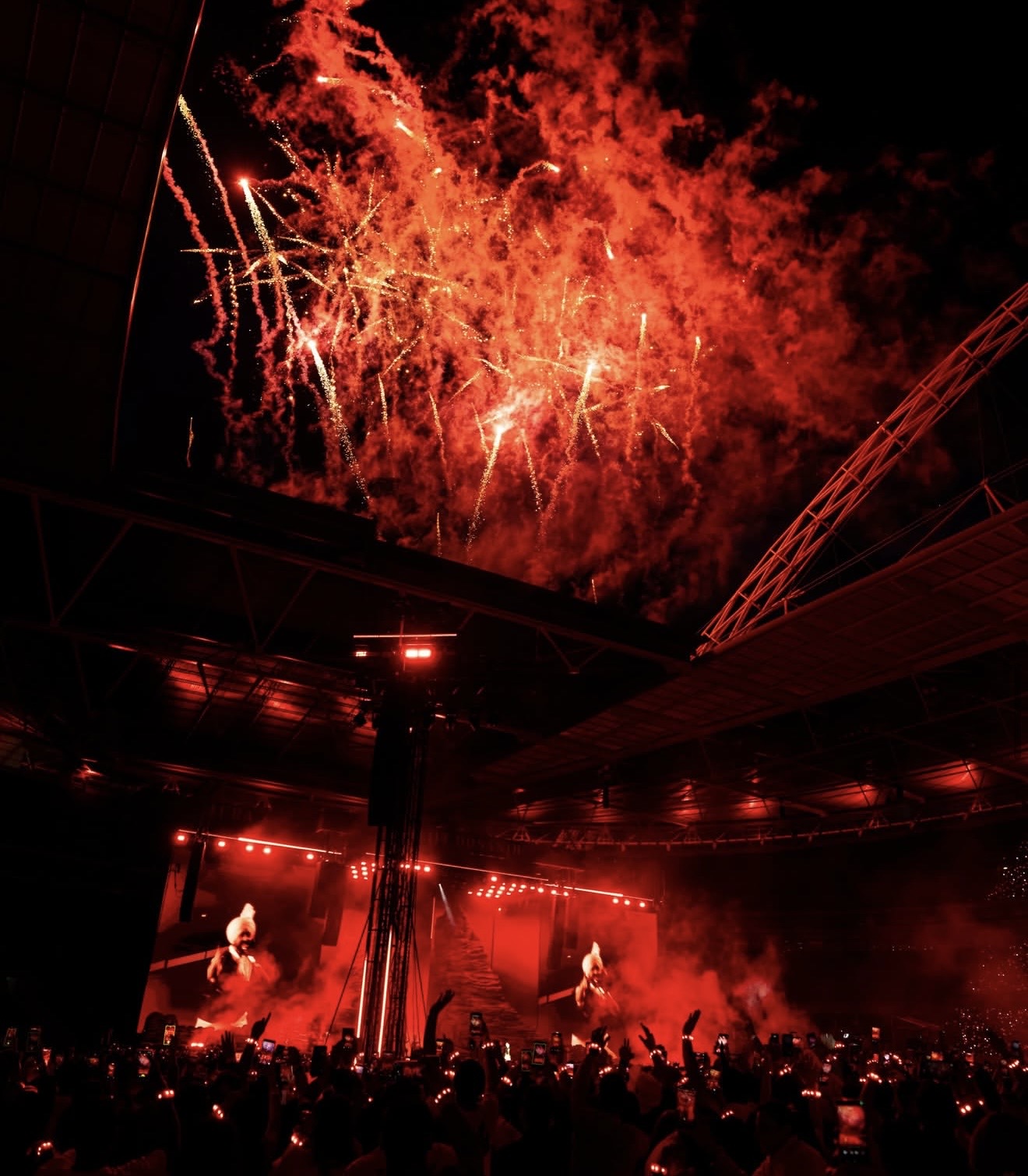
Then came an ending that could hardly have been scripted better. Diljit closed the Wembley concert with Main Hoon Punjab as fireworks erupted around the stadium. After an evening built around Punjabi pride, finishing with a song whose title means I Am Punjab gave the historic show a fitting final statement. From shouting “Punjabi Aa Gaye Wembley Oye!” at the beginning to ending beneath the fireworks with:
“Main Hoon Punjab”
The concert had come full circle. It was not simply about Diljit reaching Wembley; it was about taking Punjab with him.
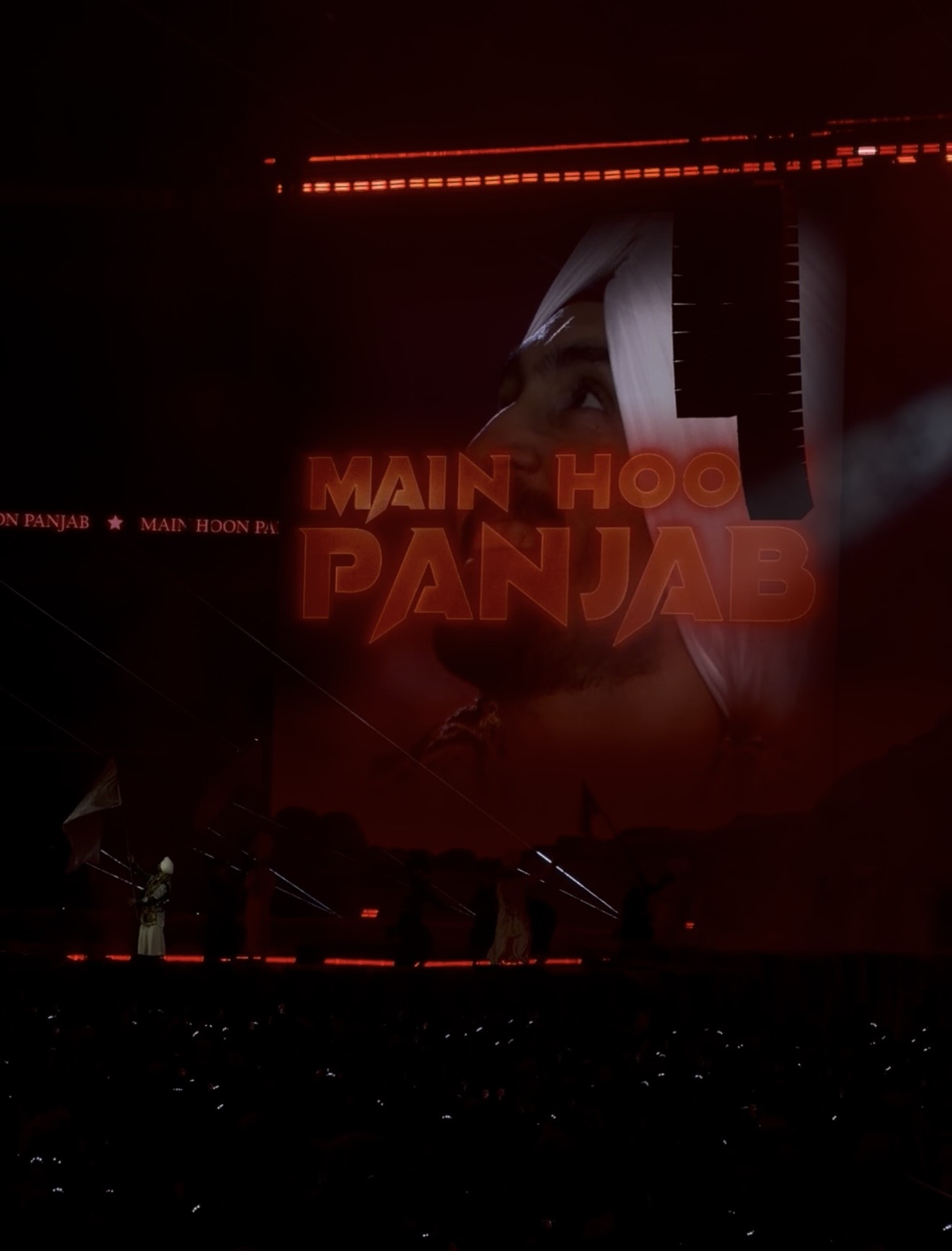
From Wembley to 132,000-Capacity Ahmedabad
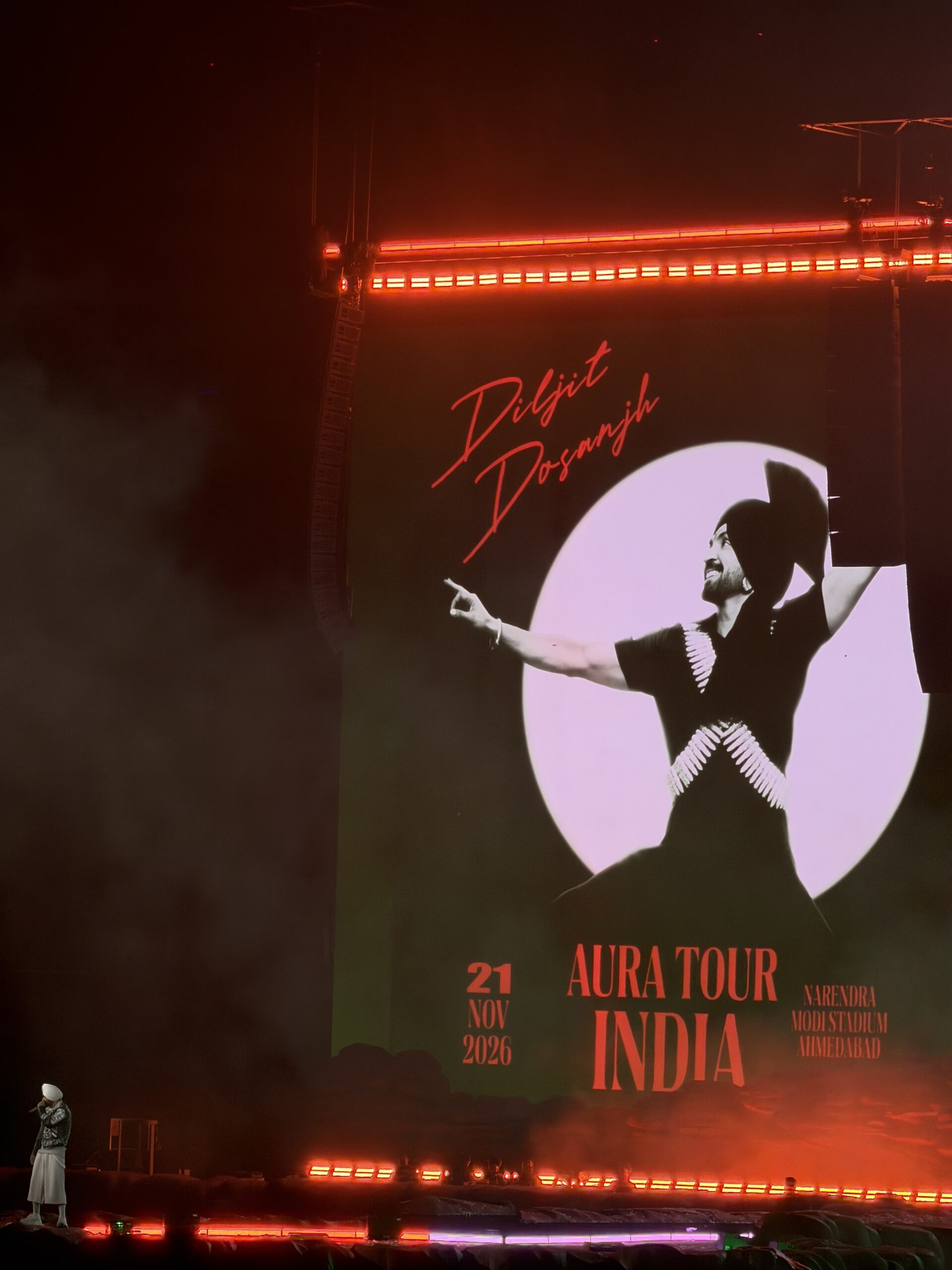
But Diljit wasn’t finished making announcements. From the Wembley stage, he revealed that the AURA World Tour is heading to Narendra Modi Stadium in Ahmedabad, with the India concert scheduled for 21 November 2026. The venue has a capacity of approximately 132,000, setting up another potentially enormous moment in his career. Referring to the scale of the stadium, Diljit joked that if the world’s biggest stadium is in India, how could a Punjabi not perform there?
The Ahmedabad announcement made the Wembley achievement feel like another chapter rather than the destination. Diljit’s journey has repeatedly involved stepping onto stages that once seemed almost unimaginable for a Punjabi-language artist, while keeping Punjab at the heart of his presentation. Wembley may be the clearest example yet.
For Punjabis in Britain, India and across the diaspora, there was plenty to feel proud about as Diljit looked across those Wembley stands. A Punjabi artist had reached one of the world’s most famous stadiums, Punjabi music was filling it, and thousands were singing back. His own words perhaps explain the night better than anything else: he wanted his people to be able to look at Wembley and believe, “yes, we can do this too.”
On 12 September, Diljit Dosanjh showed them that they can.