
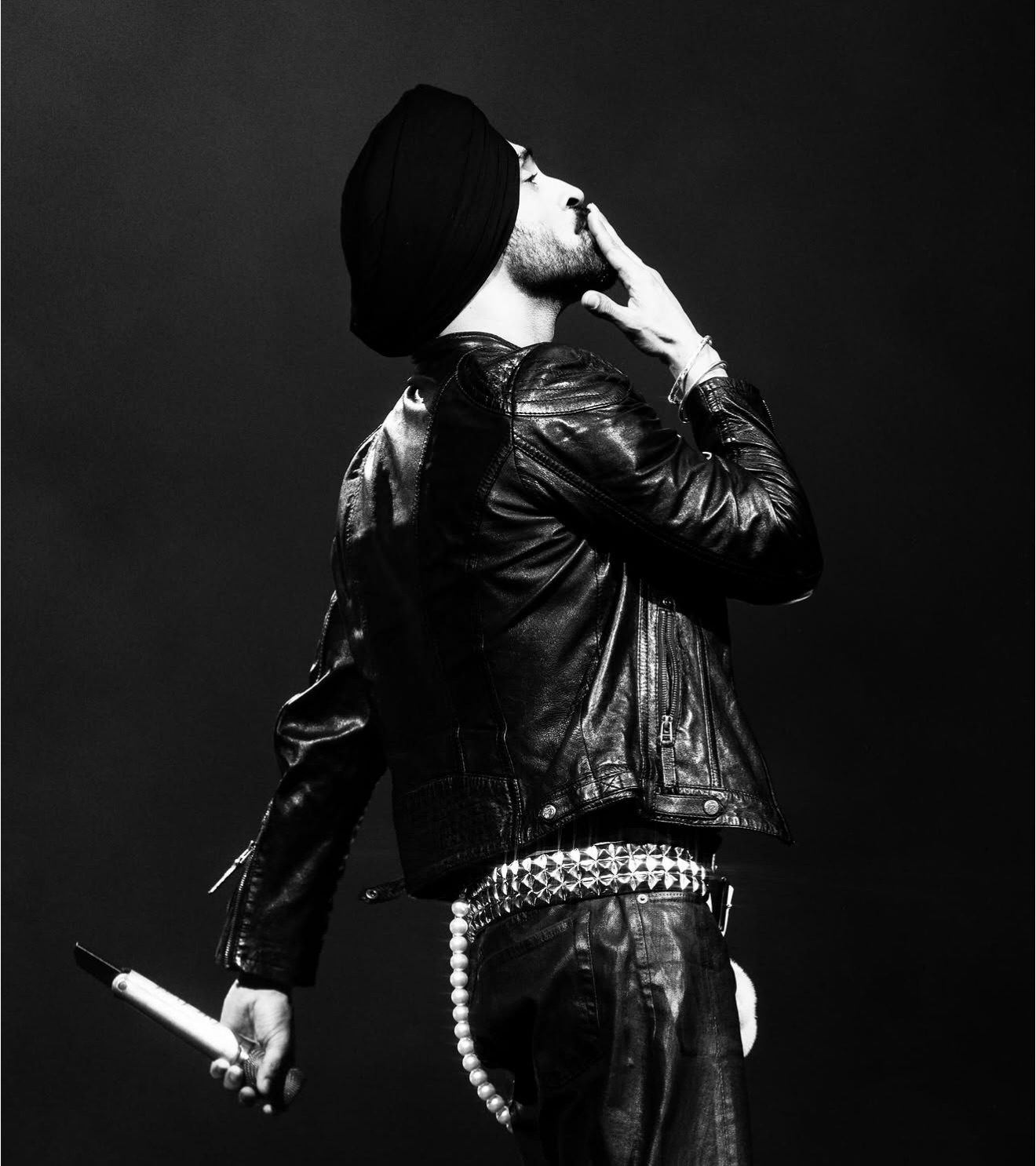
After making history beneath the Wembley arch, Diljit Dosanjh wasn’t finished with the UK. Just days after becoming the first Punjabi artist to headline Wembley Stadium, the global Punjabi superstar took his AURA World Tour north, bringing the celebration to Utilita Arena Birmingham on 18 September before arriving at Manchester’s Co-op Live on 20 September. The two dates had originally been added to the tour following huge demand surrounding the sold-out Wembley show, but by the time Diljit reached Birmingham and Manchester, they felt like something more than additional concerts. They became the continuation of an extraordinary week for Punjabi music in Britain, one that began with Punjabi lyrics echoing around Wembley and continued with thousands more fans turning out across two cities with some of the UK’s strongest British Punjabi and South Asian communities.

Birmingham Brings the Energy – and the Emotion
Birmingham was first, with Diljit arriving at Utilita Arena on Friday night for another huge AURA production. The show itself was sold out through Live Nation, and Diljit delivered a packed set that moved between different eras of his career. ‘Morni’ opened the set, followed by tracks including 5 Taara, Case, Do You Know, Clash, Lalkaara, Patiala Peg, Hass Hass and Pyar. After the intermission, the energy continued through Born To Shine, Vibe, Ranjha, Lemonade, Ikk Kudi, Kinni Kinni and Lover, before the closing stretch brought together Chauffeur, Ishq Mitaye and Main Hoon Panjab. It was a setlist that showed just how deep Diljit’s catalogue has become, moving from Punjabi anthems that fans have grown up with to songs that have accompanied his transformation into an international stadium artist.
Yet one of Birmingham’s most talked-about moments had nothing to do with pyrotechnics or production. Diljit discovered that two construction workers had come to the concert after completing a long shift and invited them onto the stage. He thanked them for spending their hard-earned money to attend his show and then bowed before them as a gesture of respect. Diljit signed their sweatshirts, gave them gifts and took a selfie with them before they left the stage. It was a small, human moment in the middle of an enormous production, and one that quickly travelled across social media. At a point in his career where Diljit is filling some of the world’s biggest venues, Birmingham showed why his relationship with his audience remains such an important part of his live performances.
There was another remarkable full-circle story connected to the Birmingham concert. A couple attending the show appeared in a viral video that cut between them enjoying AURA and footage of Diljit performing at their wedding in 2003. More than two decades separated those two moments: from a wedding performance to watching the same artist command a major British arena after headlining Wembley Stadium. Few images could capture the scale of Diljit’s journey more effectively. The artist who once performed at Punjabi weddings was now being watched by some of those same people as one of the biggest Punjabi entertainers in the world.

Manchester Becomes the Final Chapter of a Huge UK Run
Two nights later, the AURA World Tour reached Co-op Live in Manchester, bringing Diljit’s latest UK run to another of the country’s biggest indoor venues. Manchester followed a remarkable sequence: Wembley on 12 September, Birmingham on the 18th and Co-op Live on the 20th. The scale may have changed from the 90,000-capacity Wembley Stadium to arenas, but the centre of the show remained the same, Punjabi music performed unapologetically in Punjabi, backed by the kind of large-scale production now associated with Diljit’s international tours. Official tour listings confirm Manchester as the third English stop of this AURA run, completing a trio of major UK appearances before the tour continues.
Rather than treating Birmingham and Manchester as an afterthought following Wembley, the two concerts showed the depth of Diljit’s UK audience. London had delivered the history-making headline, but fans outside the capital were given their own opportunity to experience AURA. It is an important distinction: Diljit’s connection with Britain has never existed in London alone. Birmingham and Manchester have long-established South Asian communities, and bringing the tour into both cities turned his UK dates into a wider celebration rather than a single historic night.
From Punjabi Weddings to Britain’s Biggest Stages
Taken together, Wembley, Birmingham and Manchester tell an extraordinary story. On 12 September, Diljit stood beneath the Wembley arch and declared
“Punjabi Aa Gaye Wembley Oye!”
before telling the crowd that the moment would go down in history. He finished that show with Main Hoon Punjab as fireworks filled the sky. Six days later, he was in Birmingham bowing respectfully before two construction workers who had come directly from work to see him. Two days after that, Manchester was welcoming AURA to Co-op Live.
That contrast is what makes this chapter of Diljit’s career particularly powerful. The venues are enormous and the production has become global, but many of the moments people remember are still rooted in Punjabi identity, community and connection. Whether he is looking across Wembley Stadium, acknowledging workers in Birmingham or taking Punjabi music into another major British arena in Manchester, Diljit has continued to make the people in the audience part of the story.

A Connection With Fans That Goes Beyond the Music
Beyond the huge production, packed arenas and global success, some of the most touching moments of Diljit’s UK shows came from the way he connected with the people in front of him. Throughout the AURA tour, he has repeatedly made time for fans, turning enormous concerts into surprisingly personal experiences. One particularly emotional moment saw Diljit embrace a fan using a wheelchair on stage, bending down to meet them at their level and sharing a warm hug as the crowd watched. Alongside his interaction with the construction workers in Birmingham, where he showed his respect for fans who had come to see him after a long day at work, moments like these revealed another side to the superstar behind the spectacle. For many fans, that humility and warmth are part of Diljit’s appeal. No matter how much bigger the venues become, he continues to acknowledge the people who have supported his journey. From Wembley Stadium to Birmingham and Manchester, the AURA shows were filled with thousands of people, yet Diljit repeatedly found ways to make individual fans feel seen. The stages may now be among the biggest in the world, but his connection with his audience remains at the heart of the experience.

His rise has also changed what the next generation can imagine for Punjabi music. The journey from performing at weddings to Coachella, international arenas and Wembley has happened without Diljit abandoning Punjabi as the language at the centre of his music. His turban and Punjabi identity have remained visible as the stages have become larger. That matters in Britain, where generations of Punjabi families have kept the language and music alive while building communities thousands of miles from Punjab.
And the scale is about to grow again. Diljit has already announced that AURA will head to Narendra Modi Stadium in Ahmedabad on 21 November 2026, a venue with a capacity of around 132,000.
But before Ahmedabad comes the memory of an unforgettable British run: London made history, Birmingham delivered some of its most heartfelt moments, and Manchester carried the Punjabi celebration forward.
From wedding stages to Wembley, Birmingham and Manchester, Diljit Dosanjh’s message has become increasingly difficult to miss.
Punjabi music isn’t waiting to be invited onto the world’s biggest stages anymore. It is already there.